.png?width=882&height=158&name=882x158%20(1).png "882x158 (1)")

Author : Evermethod, Inc. | April 15, 2026
.png/preview.png?t=1721195409615)

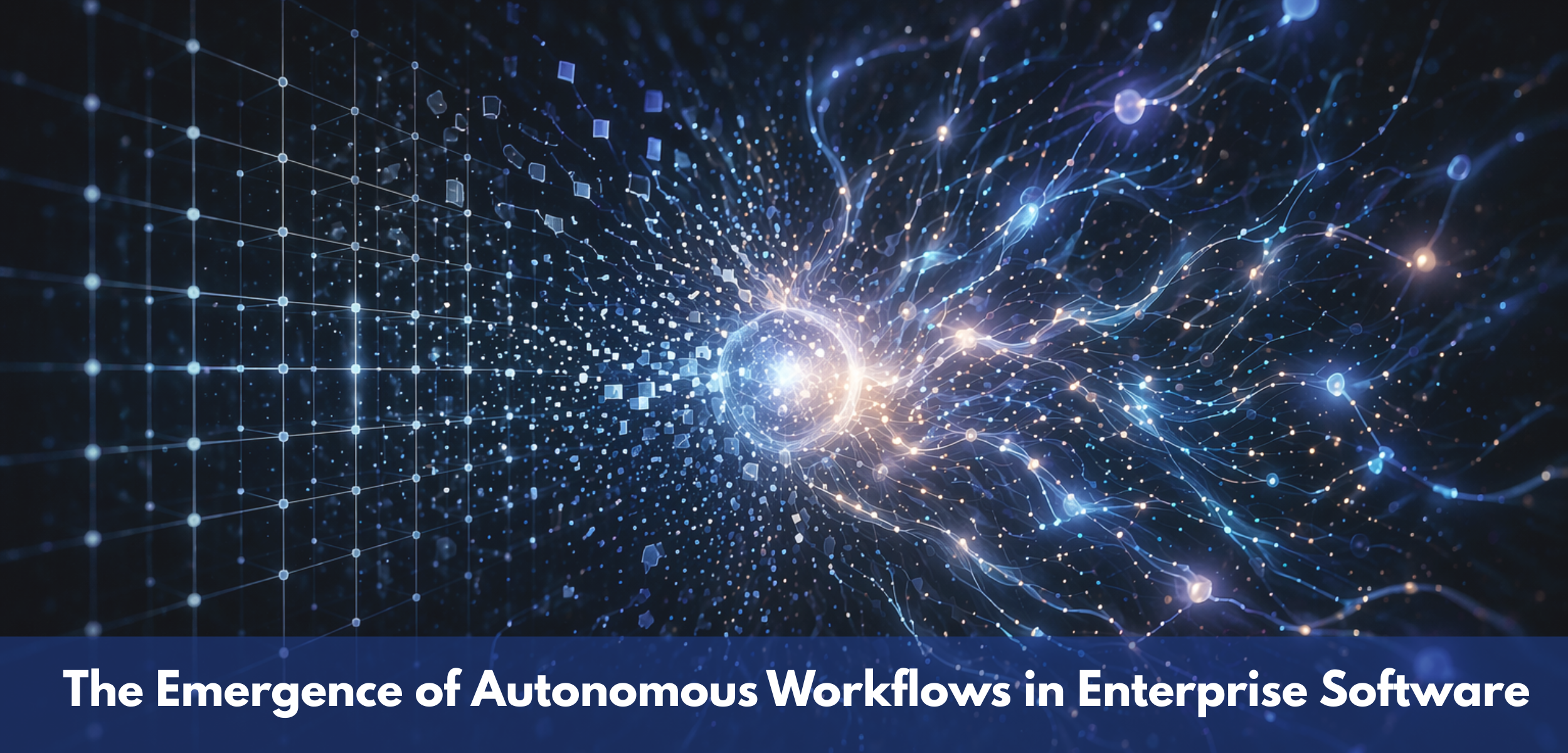
Enterprise software is no longer just about executing predefined logic. It is increasingly expected to operate in environments that are dynamic, data-rich, and unpredictable. As a result, a new class of systems is emerging, ones that can interpret goals, make decisions, and adapt their behavior in real time.
This shift marks the transition from automation to autonomy. Instead of following fixed workflows, systems now construct their own execution paths based on context and constraints. The implications of this change are significant, particularly for how software is designed, tested, and trusted in production environments.
From Automation to Autonomy
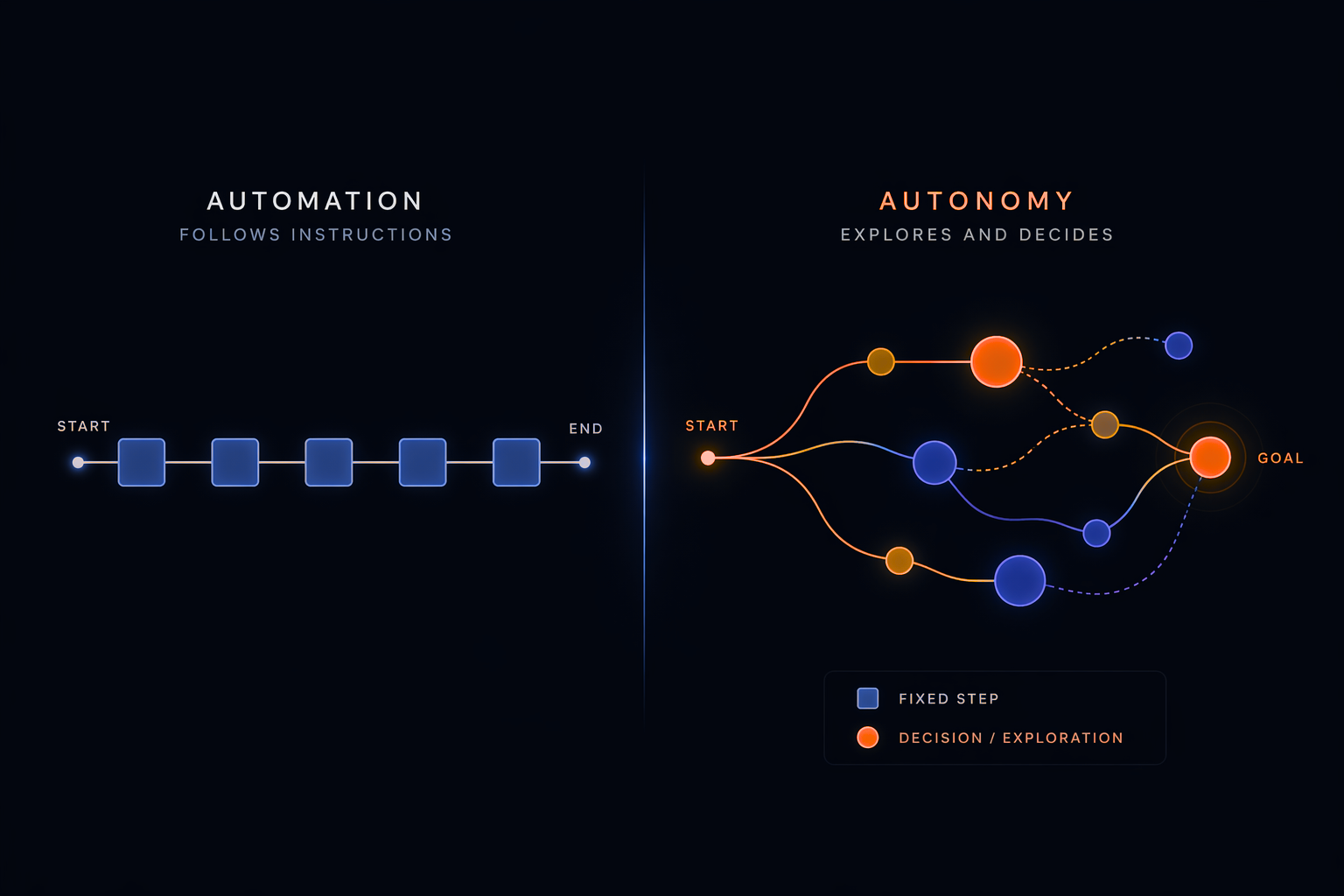
Traditional workflows were built for consistency. Each step was explicitly defined, and the system’s role was to execute those steps reliably. Even with orchestration, flexibility remained bounded by predefined logic.
Autonomous workflows break away from this model. They operate with intent rather than instruction. A system is given an objective, and it determines how to achieve it by evaluating context, selecting actions, and adjusting its behavior as conditions evolve.
This introduces a level of flexibility that was previously difficult to achieve, but it also removes the predictability that traditional systems rely on. Execution paths are no longer fixed, and outcomes may vary across runs even when the objective remains the same.
What Makes a Workflow Autonomous
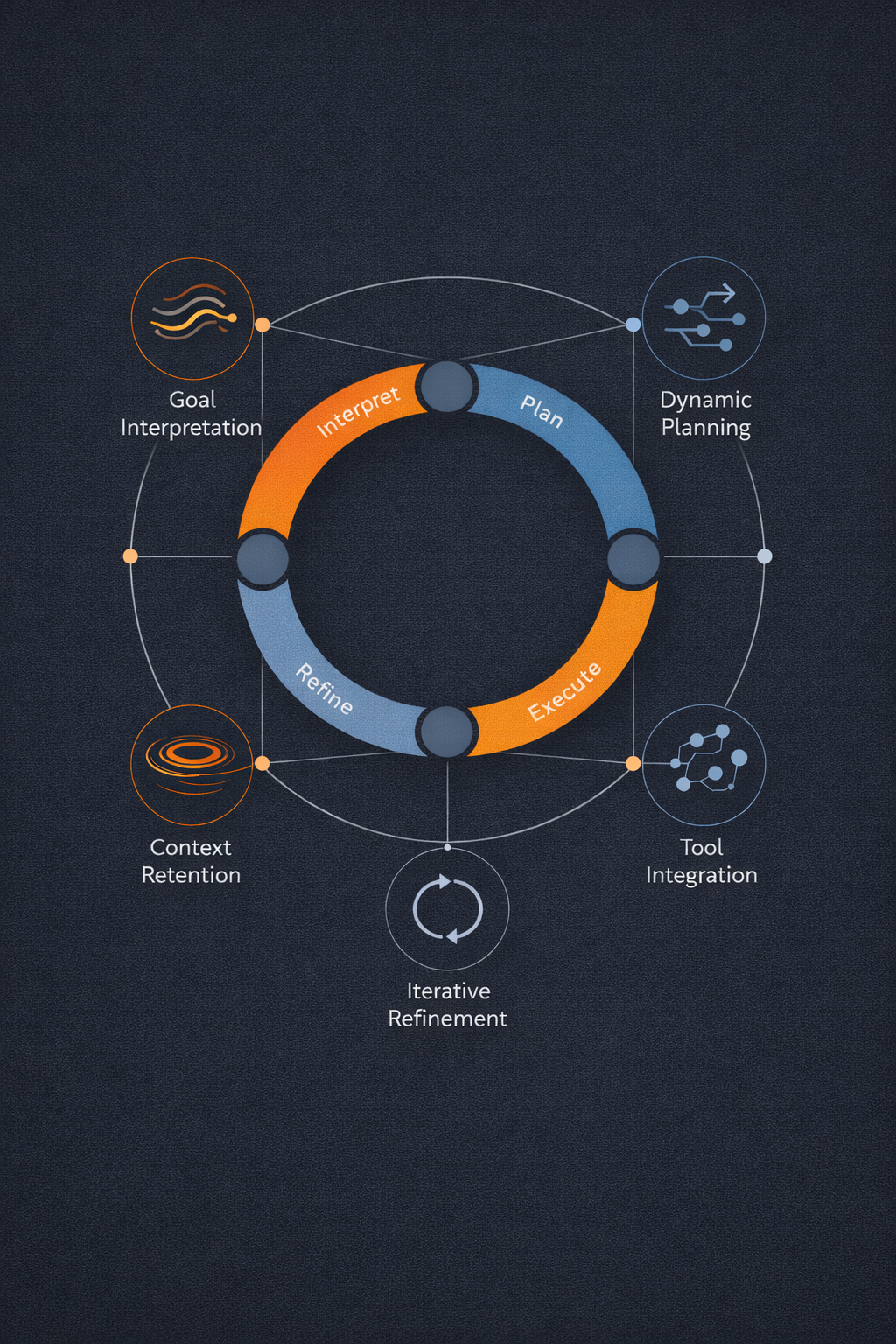
At its core, an autonomous workflow behaves less like a script and more like a decision-making process. It continuously interprets input, plans actions, executes them, and refines its approach based on feedback.
What distinguishes these systems is not just intelligence, but how that intelligence is applied during execution. Instead of relying on static instructions, the system dynamically constructs its path forward.
Key capabilities typically include:
- The ability to interpret high-level goals instead of step-by-step instructions
- Dynamic planning that evolves as new information becomes available
- Integration with external tools and services for execution
- Context retention across multiple interactions
- Iterative refinement based on intermediate outcomes
Together, these capabilities enable systems to operate in complex environments, but they also introduce variability that must be managed carefully.
How These Systems Are Built
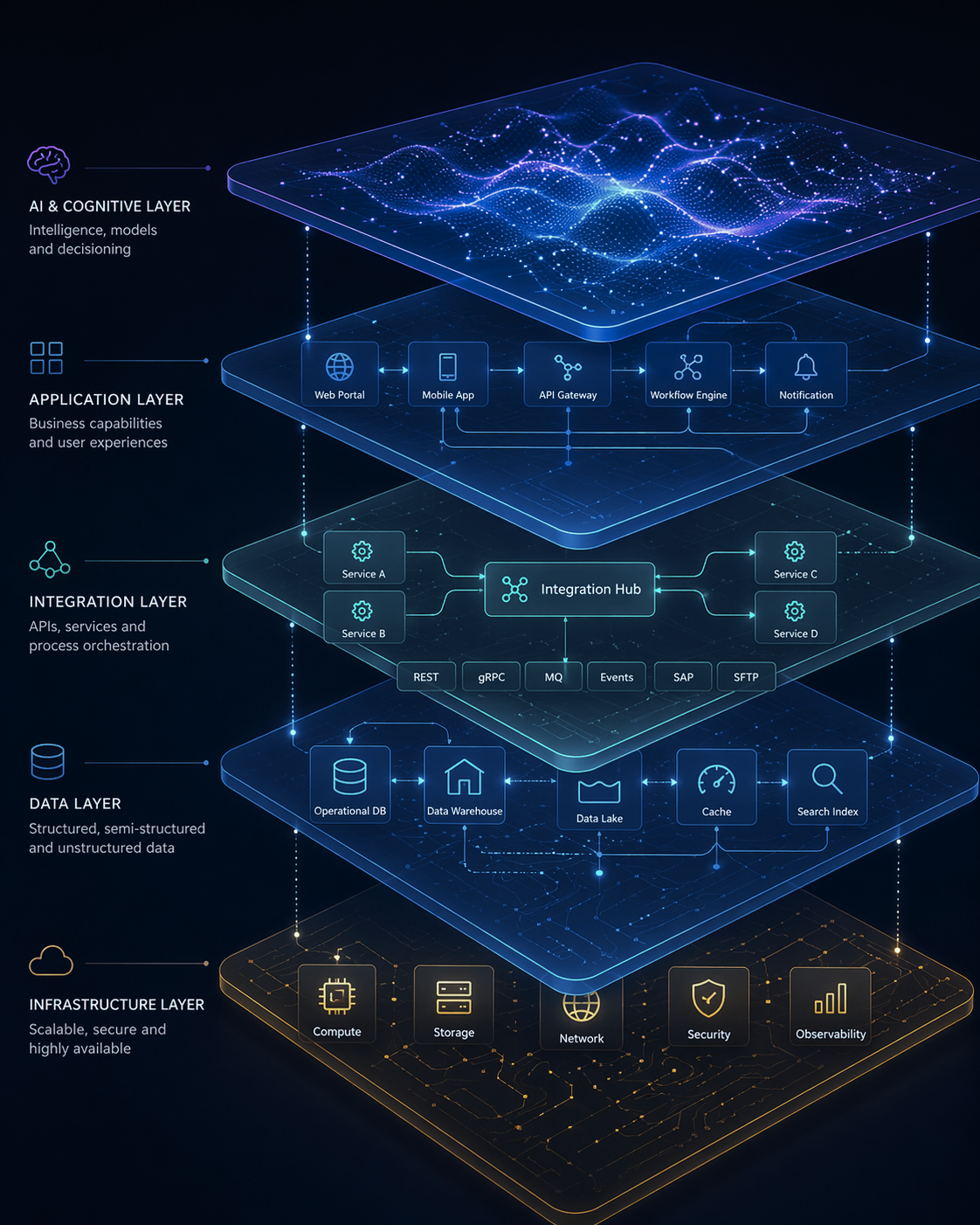
Autonomous workflows rely on a layered architecture that separates reasoning from execution and control. This separation allows each part of the system to evolve independently while maintaining overall coherence.
At a high level, these systems include:
- A reasoning layer that interprets goals and makes decisions
- An orchestration layer that manages task flow and dependencies
- A tooling layer that connects to APIs, databases, and services
- A memory layer that maintains context across steps
- An observability layer that captures system behavior
Execution within this architecture is iterative. A goal is interpreted, a plan is generated, actions are executed, and results are evaluated. The system then adjusts its approach and continues until the objective is achieved.
This continuous loop is what enables adaptability, but it also introduces non-determinism, making behavior harder to predict and reproduce.
Where Autonomous Workflows Are Showing Up
Adoption is already visible across several enterprise domains, particularly where processes are complex and conditions change frequently.
In customer operations, systems can resolve queries end-to-end by interpreting intent and dynamically selecting actions. In incident management, autonomous agents can analyze system behavior, identify root causes, and initiate remediation without predefined playbooks.
DevOps workflows are becoming more adaptive, adjusting deployment strategies based on real-time signals, while financial systems are using autonomous processes for anomaly detection and response. Across these use cases, the common thread is a shift from executing tasks to making decisions.
The Engineering Reality

While the benefits are clear, building and operating autonomous workflows introduces a different class of challenges. These are not edge cases but fundamental properties of the system.
Some of the most critical challenges include:
- Non-determinism, where the same input may produce different outcomes
- State complexity, where context must be preserved accurately over time
- External dependencies, which introduce uncertainty beyond system control
- Emergent behavior, especially in multi-agent environments
- Security risks, as systems gain the ability to act independently
These factors make traditional approaches to validation and debugging insufficient.
Why QA Needs to Evolve
Conventional QA frameworks are designed for systems with predictable behavior. They rely on fixed test cases and clearly defined expected outcomes. This approach does not translate well to autonomous workflows.
In these systems, correctness is not always a single outcome. Multiple execution paths may be valid, and evaluating quality requires understanding how decisions were made, not just what result was produced.
This leads to a fundamental shift in testing philosophy:
- Validation moves from outputs to behavior
- Test coverage expands from scenarios to patterns
- Success is evaluated probabilistically rather than absolutely
A modern QA strategy must therefore include validation of reasoning, context handling, tool interactions, and coordination across components.
The Role of Observability
As systems become more autonomous, visibility becomes essential. It is no longer enough to know what happened. Teams need to understand why it happened.
This requires deeper observability, including:
- Execution traces that capture the full sequence of actions
- State transitions that show how context evolves
- Decision points that reveal how choices are made
- Metrics that reflect system performance over time
Without this level of insight, diagnosing issues in autonomous systems becomes extremely difficult, especially when behavior cannot be reproduced exactly.
Testing Beyond Static Scenarios
Static test cases are not sufficient for systems that operate under dynamic conditions. Instead, testing must incorporate simulation to expose systems to a wide range of scenarios.
Simulation enables:
- Exploration of edge cases that are difficult to anticipate
- Controlled testing of failure conditions
- Large-scale scenario generation to identify patterns
Digital twins take this further by replicating production environments, allowing realistic testing without introducing operational risk.
At the same time, validation must become continuous. As systems evolve, their behavior changes, making ongoing monitoring and testing essential.
Conclusion
Autonomous workflows represent a fundamental shift in enterprise software. Systems are no longer limited to executing predefined logic but are now capable of making context-aware decisions in real time.
This transformation enables new levels of efficiency and adaptability, but it also introduces complexity that cannot be managed with traditional approaches. Testing, observability, and governance must all evolve to support this new model.
Organizations that adapt early will be better positioned to build systems that are not only intelligent but also reliable and trustworthy.
Build Reliable Autonomous Workflows with Evermethod Inc
As enterprises adopt autonomous workflows, ensuring reliability and control becomes a critical challenge. Evermethod Inc helps organizations design and implement advanced QA frameworks tailored for AI-driven systems, combining simulation, observability, and governance to ensure consistent performance in real-world conditions.
If your systems are making decisions independently, your QA strategy must evolve accordingly. Partner with Evermethod Inc to build systems that are not only intelligent but dependable.
%2013.png)