
Author : Evermethod, Inc. | April 30, 2026
.png/preview.png?t=1721195409615)

The Nature of Static Codebases
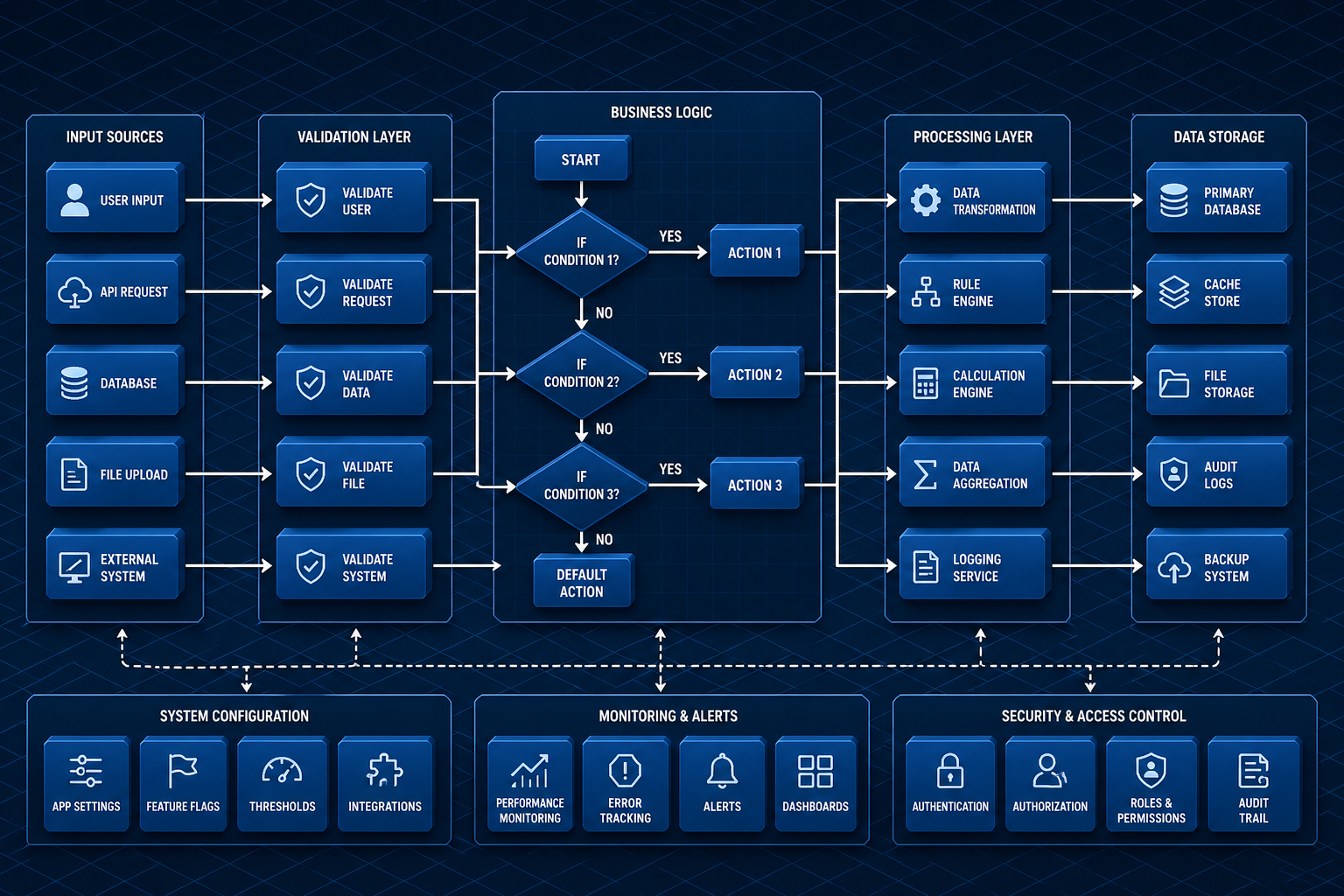
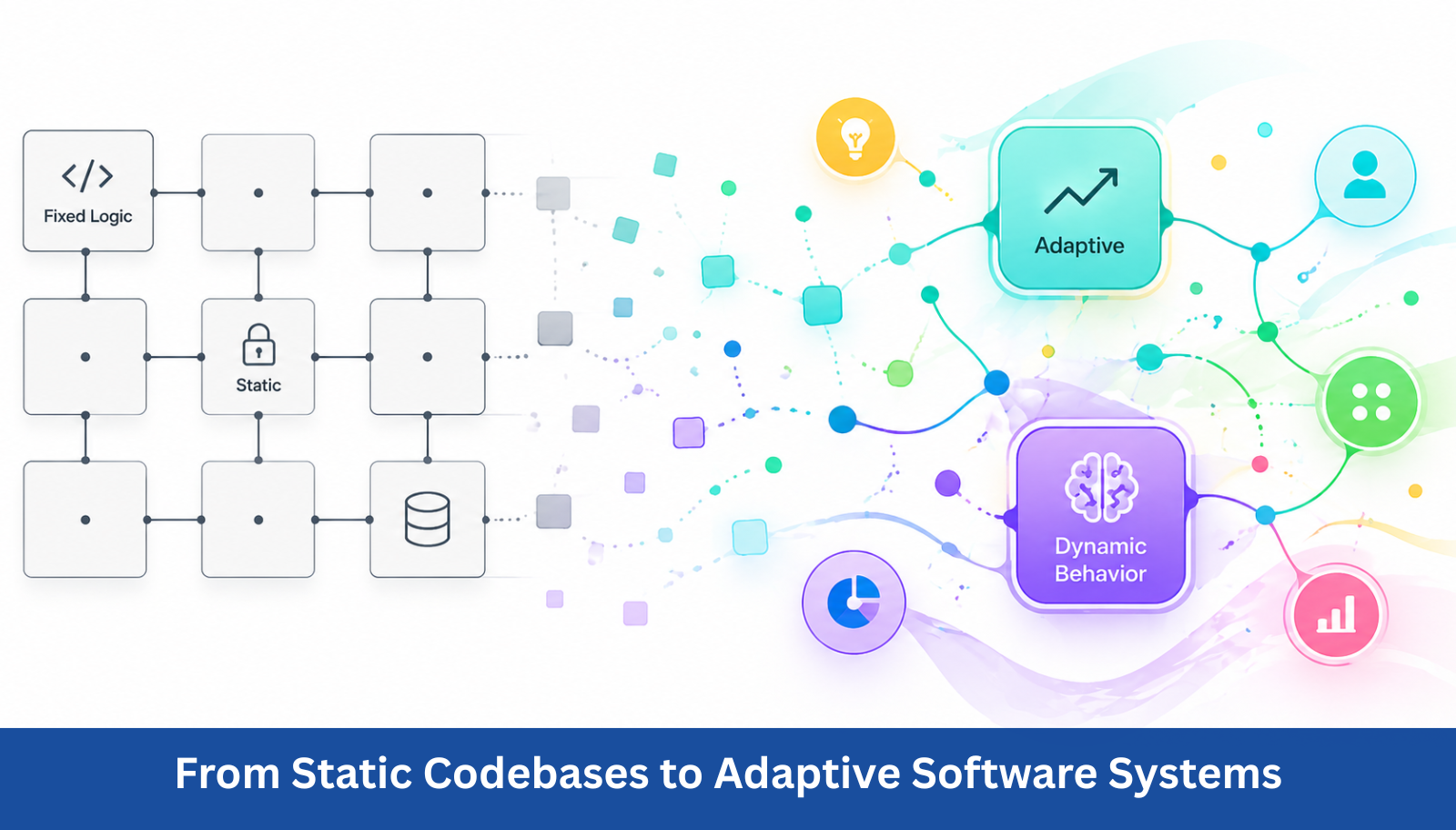
Most software systems are built on fixed logic. Behavior is defined during development, tested under expected conditions, and then deployed. Once in production, the system follows the same logic until it is changed through a new release.
This model works because it is predictable. Engineers can trace inputs to outputs, validate behavior through tests, and control when changes are introduced. It also fits well with structured deployment cycles, where updates are planned and reversible.
However, this approach depends on a stable relationship between the system and its environment. The logic assumes that the conditions it was designed for will remain relevant over time. That assumption is becoming less reliable.
When Static Logic Meets Changing Conditions
Production systems operate in environments that do not stay constant. Traffic patterns shift over time. User behavior evolves. External services introduce variability that cannot always be predicted.
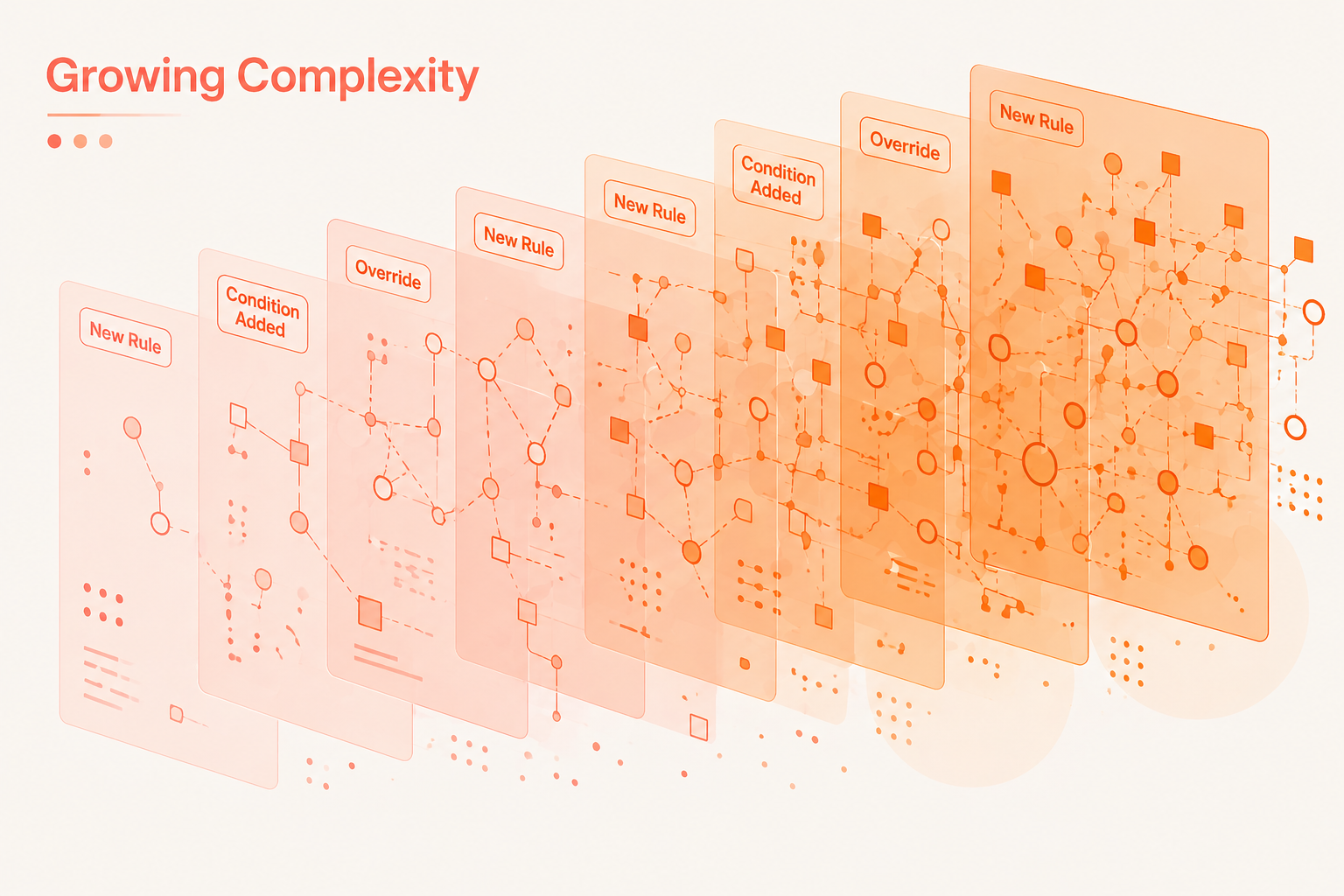
In a static system, these changes are handled by adjusting the existing logic. Teams modify thresholds, add new conditions, and refine configurations. Each change is local and targeted, but the overall system becomes more complex.
Over time, the system begins to reflect a history of adjustments rather than a clear design. Behavior is still deterministic, but it is harder to reason about. Small changes can have wider effects because the logic has grown around many specific cases.
At this point, the limitation is not performance or scale. The limitation is that the system cannot adjust its behavior without being explicitly changed.
Introducing Adaptation into the System
.webp?width=1539&height=1024&name=undefined-Apr-30-2026-11-20-07-4606-AM%20(1).webp)
Adaptive systems approach this differently. Instead of relying entirely on predefined logic, they incorporate mechanisms that allow behavior to respond to current conditions.
This does not mean removing structure. The system still operates within defined boundaries. What changes is how decisions are made within those boundaries.
Rather than encoding every scenario in code, the system uses feedback from its own operation. It observes how it performs and adjusts based on that information.
In practice, this can take several forms:
- Decisions informed by recent system behavior rather than fixed thresholds
- Components that update their behavior as new data becomes available
- Feedback loops that connect outcomes back into future decisions
The key shift is that behavior is no longer fully determined at deployment. It continues to evolve as the system runs.
What Changes When Behavior Evolves at Runtime
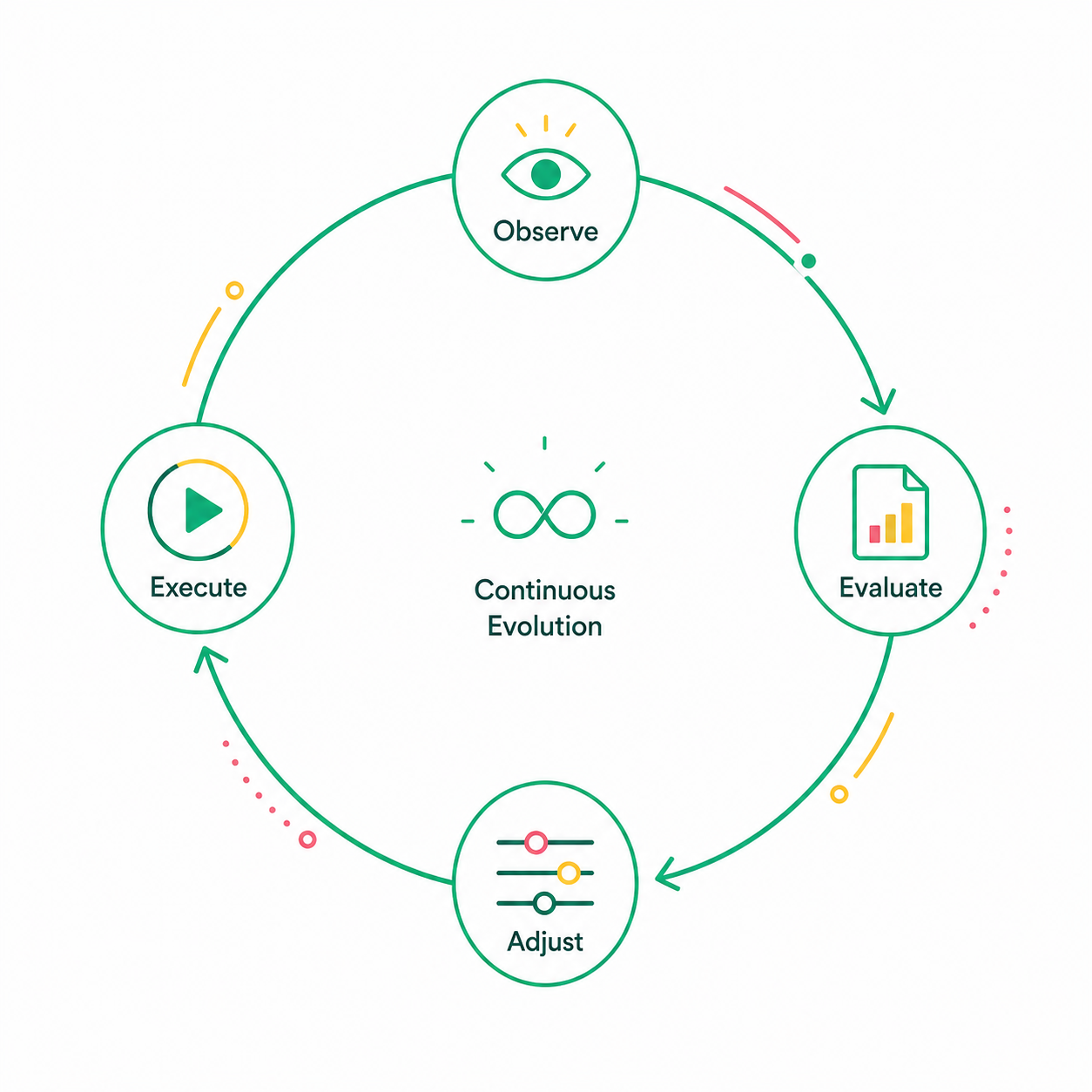
Once a system can adapt, its behavior is no longer tied only to code. It also depends on the data it receives and the way it processes that data over time.
This introduces a different kind of complexity. A system may change its behavior without any code being deployed. Performance may shift gradually rather than failing abruptly. Issues may not be traced to a single change, but to a pattern that developed over time.
This affects how systems are managed. Monitoring can no longer focus only on availability and latency. It also needs to track whether the system’s behavior remains aligned with expectations. This includes observing trends, detecting drift, and understanding how decisions change over time.
Control also becomes more continuous. Instead of managing discrete releases, teams manage systems that are always adjusting within defined limits.
Designing for Adaptive Behavior
.webp?width=1536&height=1022&name=undefined-Apr-30-2026-11-24-51-0368-AM%20(1).webp)
As systems move in this direction, the design priorities change. It becomes important to separate execution from decision-making. Services still handle requests and perform operations, but the logic that guides decisions may exist outside of them and evolve independently.
Feedback loops become part of the architecture. They are not added later but built into how the system operates. Observability expands to include not just system health, but also the quality and consistency of outcomes.
The goal is not to remove predictability. It is to define where predictability is required and where controlled adaptation is acceptable.
This requires clear boundaries. Systems must be able to change, but those changes must remain visible and constrained.
Conclusion
The shift from static codebases to adaptive software systems does not replace existing architectural practices. It extends them to handle environments that are no longer stable.
Static systems rely on predefined behavior and controlled updates. Adaptive systems introduce the ability to adjust behavior during operation, based on observed conditions.
This changes how systems are built and how they are managed. It requires new ways of thinking about control, monitoring, and stability.
At its core, the transition reflects a simple reality. Software systems are no longer operating in predictable environments, and their behavior cannot remain fixed if they are expected to remain effective.
Design Systems That Adapt with Changing Conditions
Building adaptive systems requires more than adding new components. It requires a clear approach to how behavior is defined, observed, and controlled over time.
Evermethod Inc works with teams to design software systems that can adapt to changing conditions while maintaining reliability and clarity in operation.
%2013.png)