
Author : Evermethod, Inc. | January 21, 2026
.png/preview.png?t=1721195409615)

Software failures often appear sudden in production, but they usually develop over time. Risk builds as systems evolve, delivery pressure increases, and early warning signs are ignored because nothing has failed yet. Code changes accumulate, pipelines degrade, and teams adapt to instability instead of addressing it directly. When failure finally occurs, it feels unexpected even though the conditions for it were present much earlier.
This pattern repeats across organizations and industries. Teams respond well during incidents, but struggle to recognize risk while there is still time to act. Predictive engineering focuses on closing this gap. It helps teams understand how failure risk forms during everyday engineering work and how to intervene before problems escalate.
How Software Failure Risk Builds Over Time
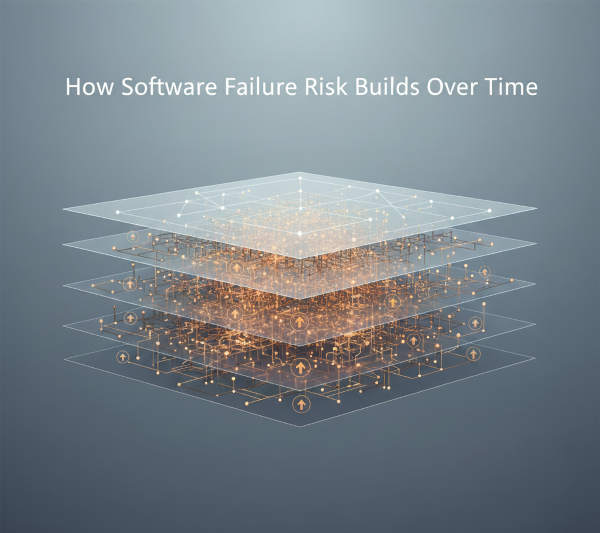
Failure risk does not emerge at a single point in the delivery lifecycle. It accumulates gradually across development, integration, delivery, and operations. Each stage introduces different forms of instability, and these instabilities often reinforce each other if left unaddressed.
During development
Risk often begins in the codebase itself. Certain patterns consistently increase the likelihood of failure, especially when they persist over time.
Common contributors include:
- Components that change frequently
- High cyclomatic or structural complexity
- Poorly defined interfaces
- Shared ownership without clear responsibility
These areas become harder to reason about as they evolve. Tests may exist, but they often fail to capture edge cases created by frequent change. Over time, engineers lose confidence in making changes, even for simple fixes.
During integration and testing
As code moves through integration, instability becomes more visible but not always actionable. Teams often encounter:
- Intermittent pipeline failures
- Flaky tests with unclear root causes
- Increasing build and feedback times
Because these issues do not block every release, they are often deprioritized. Workarounds become normalized, and the underlying causes remain unresolved. Each workaround adds hidden risk to future changes.
During delivery
Delivery pressure amplifies existing risk. Tight deadlines reduce time for careful review and validation. Teams rely on recent success as evidence that a release is safe, even when warning signs exist.
Risk increases when:
- Releases bundle many unrelated changes
- Rollbacks are complex or slow
- Validation environments differ from production
At this stage, decisions are often driven by schedule rather than evidence.
In production
Risk continues to surface slowly through operational signals. These signals include:
- Gradual increases in latency variability
- More frequent but smaller error spikes
- Rising resource usage under normal load
Each signal may appear manageable on its own. Together, they indicate growing fragility. Predictive engineering connects these signals and treats them as part of a single risk profile.
Why Monitoring Alone Falls Short
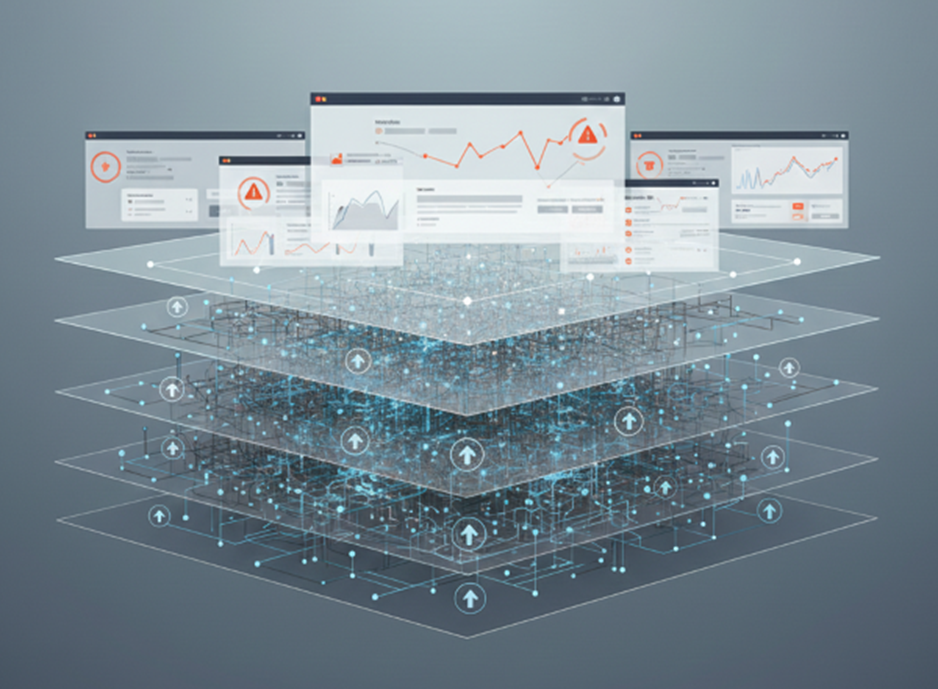
Monitoring systems are essential for operating software reliably. They provide visibility into system health and enable rapid response when failures occur. However, monitoring is reactive by nature and focuses on symptoms rather than causes.
Most high-impact decisions occur before alerts fire, including:
- Whether a change should be merged
- Whether a release should proceed
- Whether additional validation is required
Without predictive insight, these decisions rely heavily on intuition and past experience. Even skilled teams misjudge risk when signals are fragmented across tools and workflows.
Predictive engineering complements monitoring by shifting attention earlier in the lifecycle. It focuses on patterns that historically lead to failure, not just on thresholds that indicate failure has already occurred.
What Predictive Engineering Actually Does

Predictive engineering focuses on understanding when risk is increasing, not on predicting the exact moment of failure. It does not attempt to forecast outages or promise certainty. Instead, it helps teams decide where attention is needed before failure occurs.
The goal is to assess relative risk. Rather than asking whether a release will fail, teams can understand whether it is riskier than usual and what factors are contributing to that risk.
How risk is assessed
Predictive engineering analyzes patterns across engineering data that already exists in most organizations. Key signals include:
- Change frequency and scope
Frequently modified components tend to accumulate risk faster, especially when changes are large or span multiple areas. - Code complexity and dependency structure
Highly complex or tightly coupled components are harder to reason about and more likely to introduce cascading issues. - Pipeline reliability and test stability
Flaky tests and unreliable pipelines reduce confidence in feedback and hide real system problems. - Deployment history and rollback behavior
Repeated rollbacks and hotfixes point to unresolved risk, even when individual incidents appear minor. - Production performance and error trends
Gradual shifts in latency, errors, or resource usage often signal instability long before alerts trigger.
Each signal on its own can seem manageable. Predictive engineering looks at how signals align over time. When high change frequency overlaps with complex code, unstable tests, and worsening production trends, the likelihood of failure increases sharply.
Turning Risk Signals into Better Decisions

Risk information is useful only when it leads to action. Predictive engineering supports practical decision-making at multiple points in the delivery process.
Teams can use risk signals to:
- Apply deeper review to higher-risk changes
- Reduce release scope when instability is detected
- Adjust rollout strategies for services under stress
- Prioritize stabilization work over new features
These actions are not disruptive. They are small, deliberate adjustments made earlier than usual. Acting earlier reduces cost and effort while preserving delivery momentum.
Over time, these early interventions reduce the frequency and severity of incidents. Failures still occur, but they are easier to manage and recover from.
The Human Side of Predictive Engineering
Risk information matters only when it changes behavior. Predictive engineering is effective because it connects risk signals directly to everyday delivery decisions, rather than treating them as abstract metrics.
Instead of stopping work, teams use risk signals to adjust how they move forward.
How teams act on risk signals
Predictive insight supports practical choices such as:
- Applying deeper review to higher-risk changes
Changes that touch complex or frequently modified areas receive more scrutiny, reducing the chance of hidden side effects. - Reducing release scope when instability appears
Teams can defer lower-priority changes and focus on shipping a smaller, safer set of updates. - Adjusting rollout strategies for stressed services
Gradual rollouts, added monitoring, or fast rollback paths reduce impact if issues emerge. - Prioritizing stabilization over new features
When risk trends upward, teams invest time in strengthening weak areas before adding complexity.
These actions are small and intentional. They happen earlier than traditional responses, when changes are still easy to make. Early adjustments preserve delivery momentum while lowering risk.
Over time, this approach reduces the number of severe incidents. Failures still occur, but they are easier to diagnose, contain, and recover from.
Conclusion
Software failure is not only a technical problem. It is also a timing problem. Predictive engineering improves timing by making risk visible earlier, when teams still have options. By understanding how risk accumulates and acting before it turns into failure, teams move from reactive recovery to deliberate engineering practice.
Supporting Better Release Decisions Through Predictive Engineering
Evermethod Inc helps engineering teams apply predictive engineering to identify software failure risk earlier in the delivery lifecycle. The work focuses on using existing development and operational data to support better release and reliability decisions.
%2013.png)