
Author : Evermethod, Inc. | December 2, 2025
.png/preview.png?t=1721195409615)

Modern enterprises sit on top of massive data volumes that grow by the day. Systems expand. Teams multiply. New products appear. Each shift adds more complexity to how data moves, how it is stored, and how it is governed. Traditional centralized approaches cannot keep up with these changes. As a result, organizations have turned their attention to Data Mesh and Data Fabric. Each model solves different challenges, yet both attempt to simplify how data reaches the people who need it.
This article breaks down each concept in depth, explains how they differ, and explores how they can work together in large, fast-moving environments. The goal is to give leaders and architects a clear, structured view of how these approaches can help create a resilient data ecosystem.
The Shift to Distributed Data Architecture
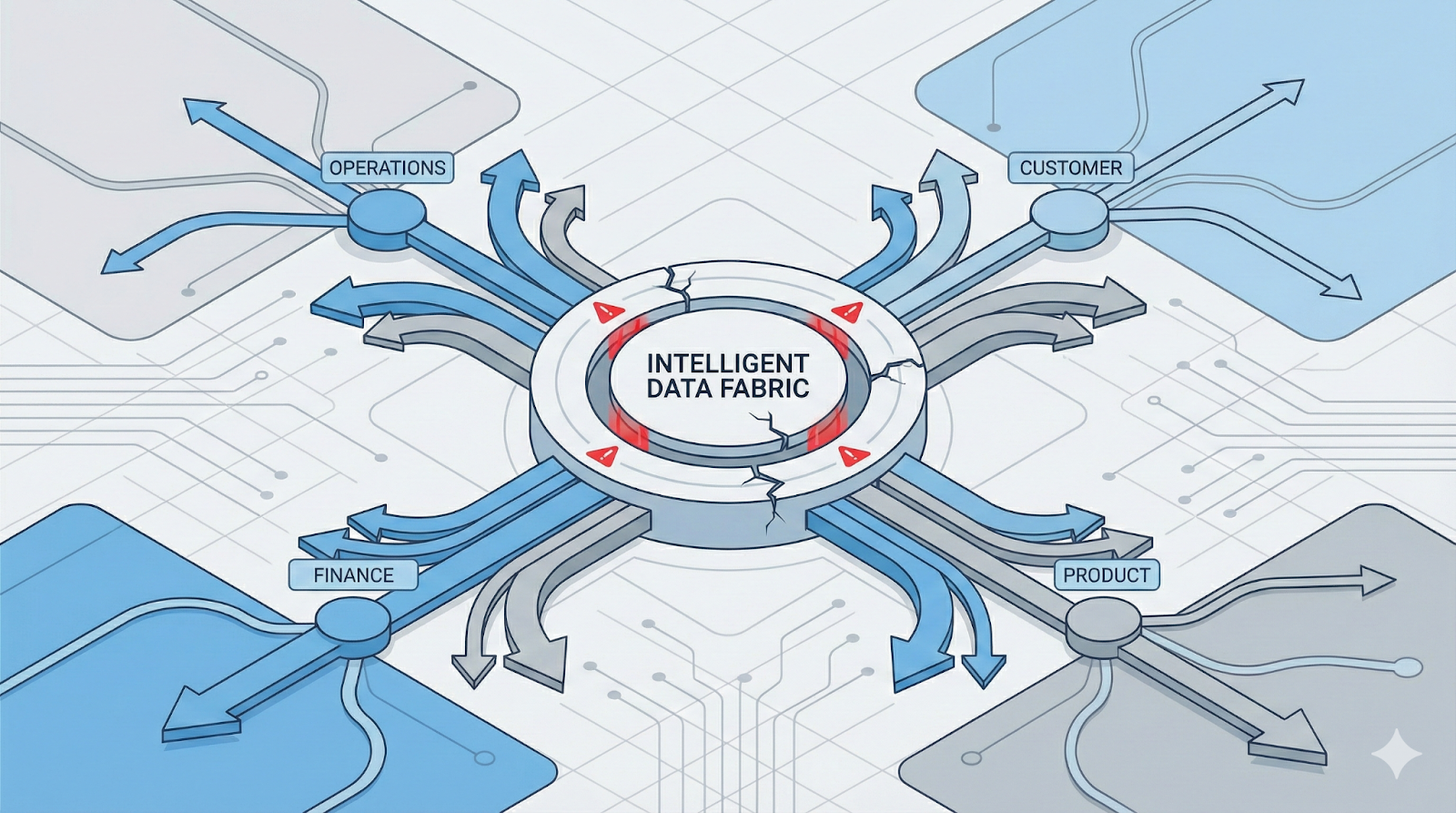
Enterprises rarely stay small or simple for long. With new digital products and global operations, data tends to scatter across applications, cloud platforms, warehouses, and analytics engines. As a result, centralized teams become bottlenecks. Analysts wait for data. Engineers struggle with a backlog. Governance frameworks fall behind the speed of change.
Distributed data architecture emerged as a response. Instead of one central team controlling every step, ownership is shared across domains. These domains understand their data better than anyone else, which makes them suitable stewards of its quality, structure, and meaning.
Distributed models offer:
- Faster delivery cycles
- Better alignment with business teams
- More context-aware data products
- Lower operational dependencies
This shift paved the way for Data Mesh and Data Fabric to rise as leading architectural strategies.
Understanding Data Mesh
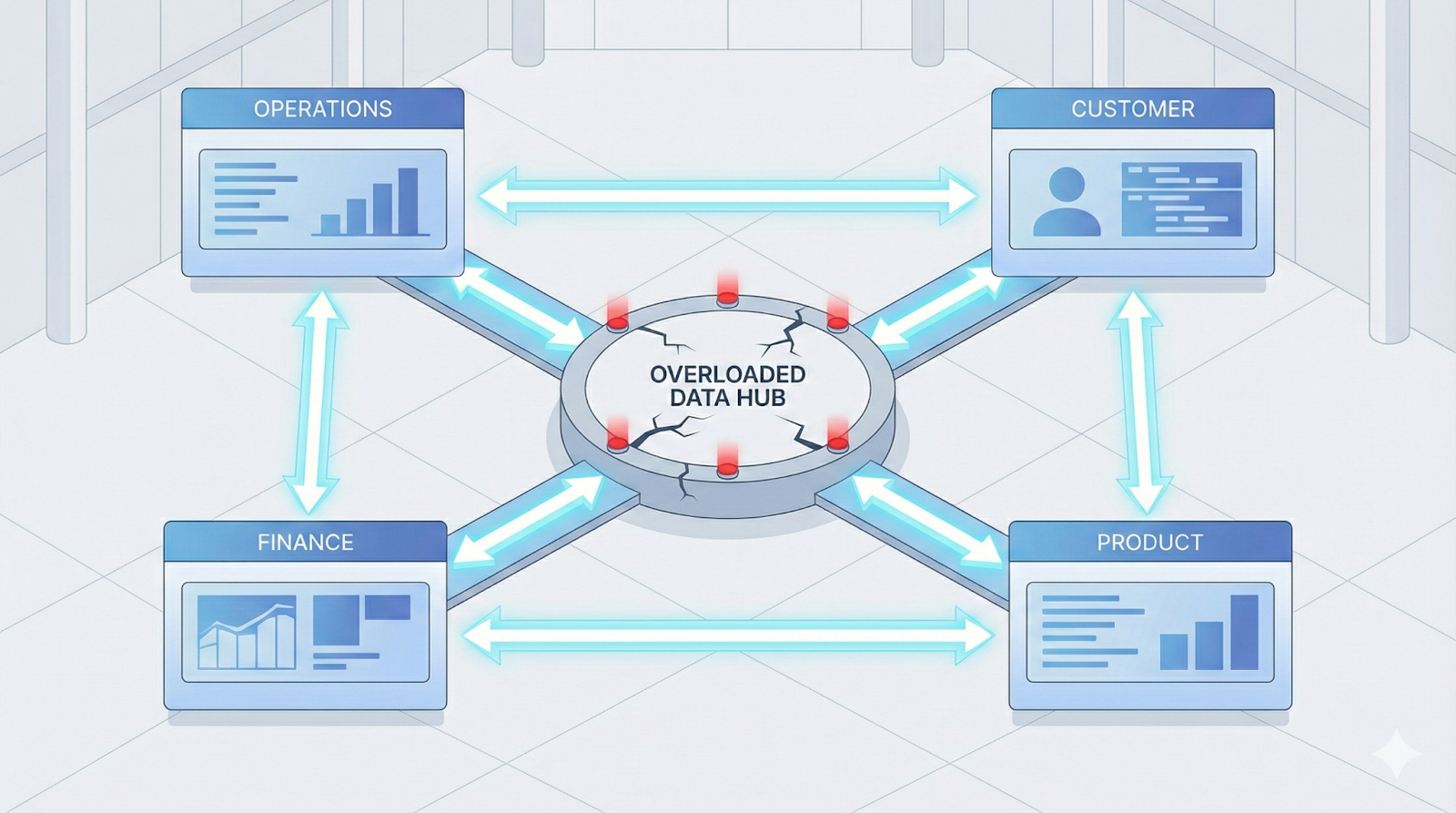
Data Mesh focuses on people, process, and organizational design. It encourages teams to treat data as a product, not just a pipeline output. Every domain becomes responsible for producing high-quality, well-documented, easy-to-use data products.
Key ideas include:
Domain Ownership
Teams closest to the business logic manage the data. This creates accountability at the source and reduces misinterpretation.
Data as a Product
Each dataset comes with clear documentation, contracts, service levels, and versioning. The experience resembles consuming an API rather than a raw table.
Federated Governance
Domains align with enterprise-level rules for quality, security, and interoperability. Governance is shared, not centralized.
Self-Serve Infrastructure
A platform team provides tools that domains need to publish and maintain their data products. Domains focus on meaning. The platform handles the mechanics.
Data Mesh transforms how data responsibilities are distributed across an organization. It does not prescribe technology. Instead, it provides a model for scaling ownership and quality.
Understanding Data Fabric
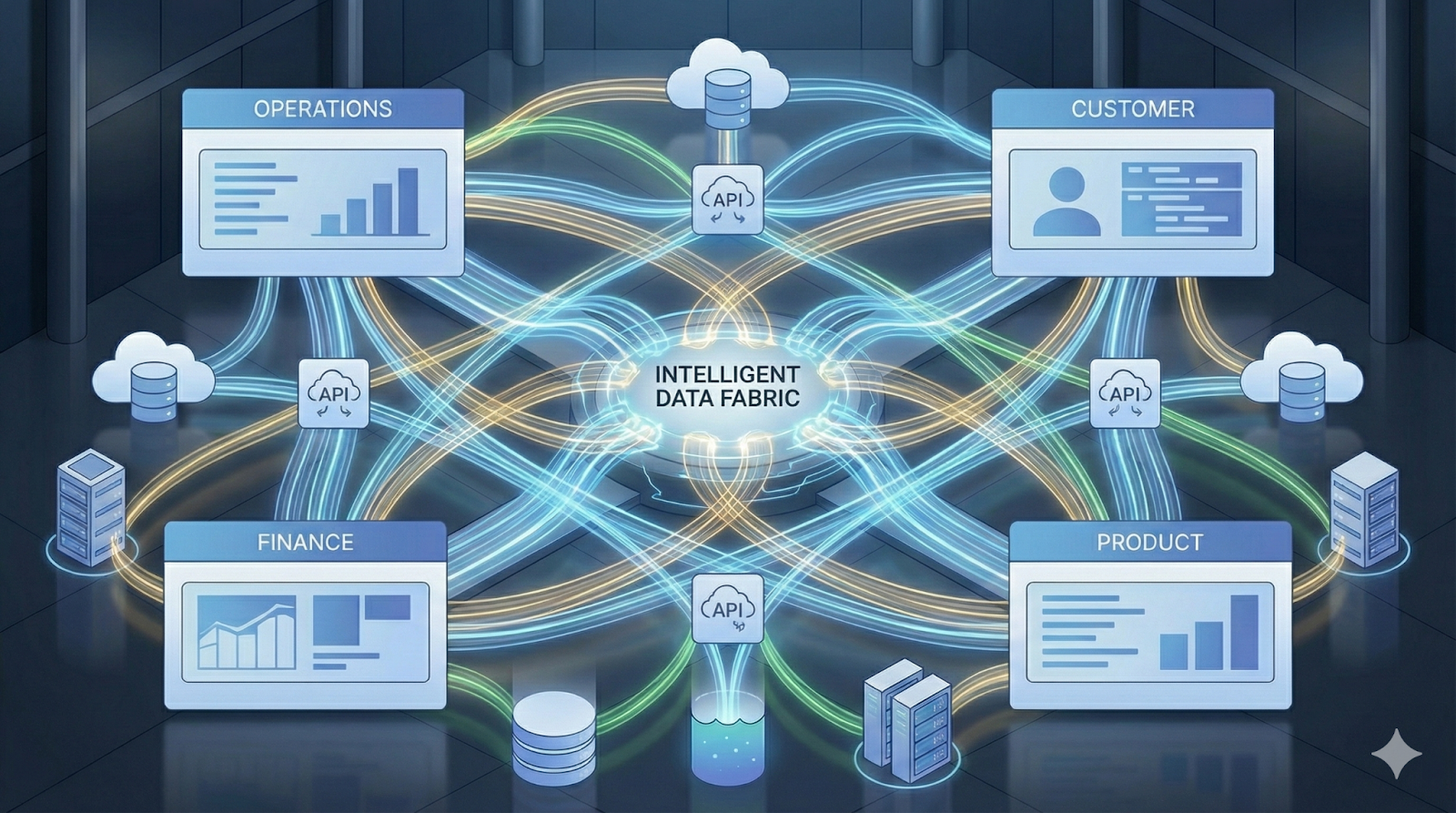
Data Fabric focuses on connectivity, automation, and discovery. Instead of changing organizational structures, it enhances the technical underpinnings of the entire ecosystem. It creates a unified layer that sits above the underlying systems.
Its core capabilities include:
Unified Metadata Layer
All systems feed metadata into a central graph. This lets fabric tools track assets, classify data, understand lineage, and automate policies.
Smart Data Movement
Fabric solutions decide how and where data should move. They use automation to synchronize, transform, and optimize pipelines.
End-to-End Visibility
Users gain a consistent view of data, even if it spans warehouses, lakes, APIs, and cloud regions.
Global Governance
Policies are enforced automatically across systems, regardless of where the data originates.
Data Fabric creates intelligence across the enterprise system. It links applications and storage engines and automates many tasks that normally require manual intervention.
When Centralized Models Stop Scaling

Centralized models work well in small organizations. The platform team manages everything, decisions are simple, and data volumes are manageable. Over time, this structure loses its ability to respond to demand.
Data increases faster than the central team can process it. Pipelines take longer to refresh. Analysts compete for engineering time. Governance rules become difficult to enforce across many projects.
None of these issues suggest failure. They simply indicate that the organization has grown beyond what centralized structures can support. Distributed approaches like Data Mesh and automation-heavy approaches like Data Fabric become essential at this stage.
When Mesh Meets Fabric: Synergy in Enterprise Data
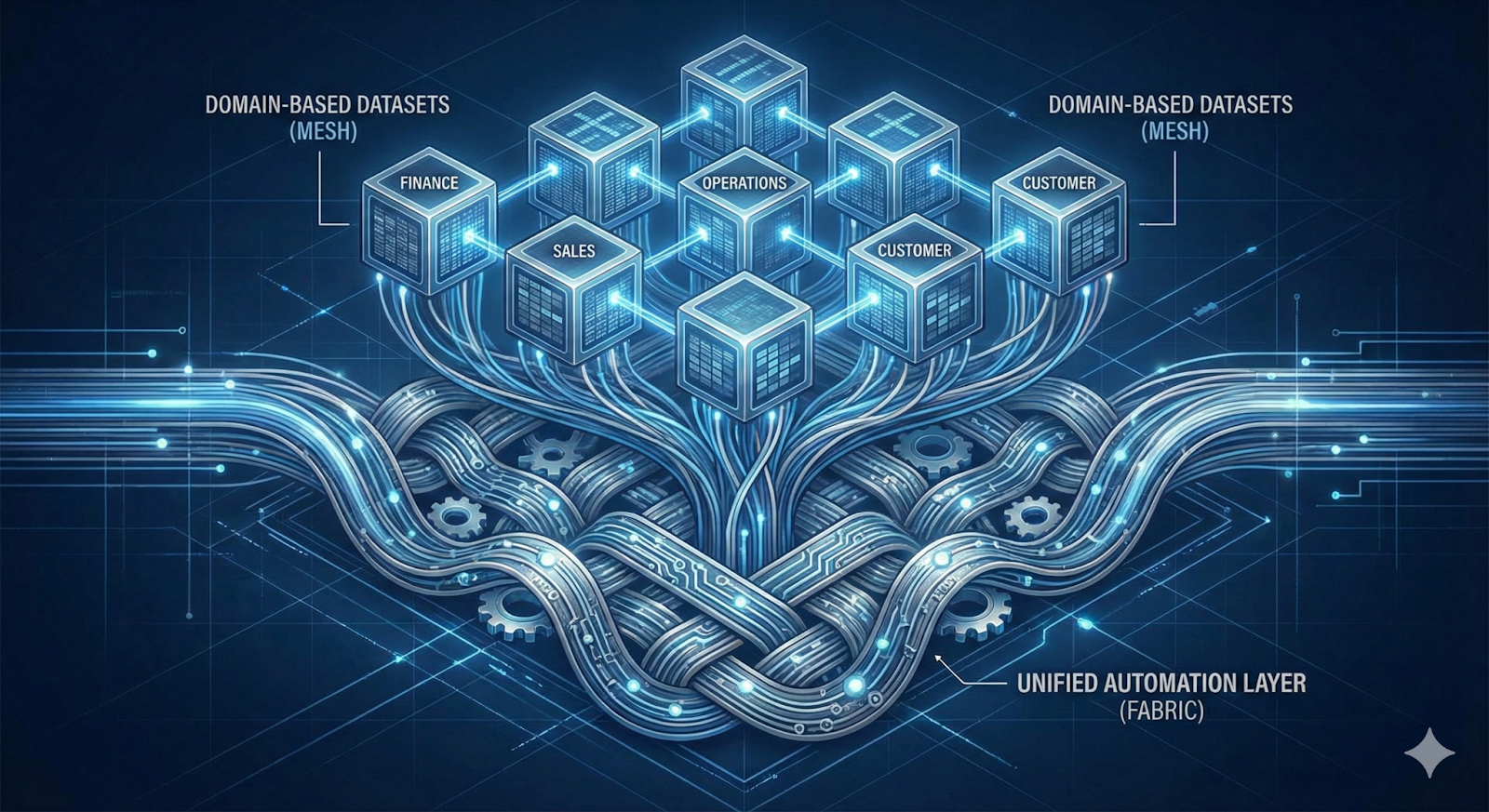
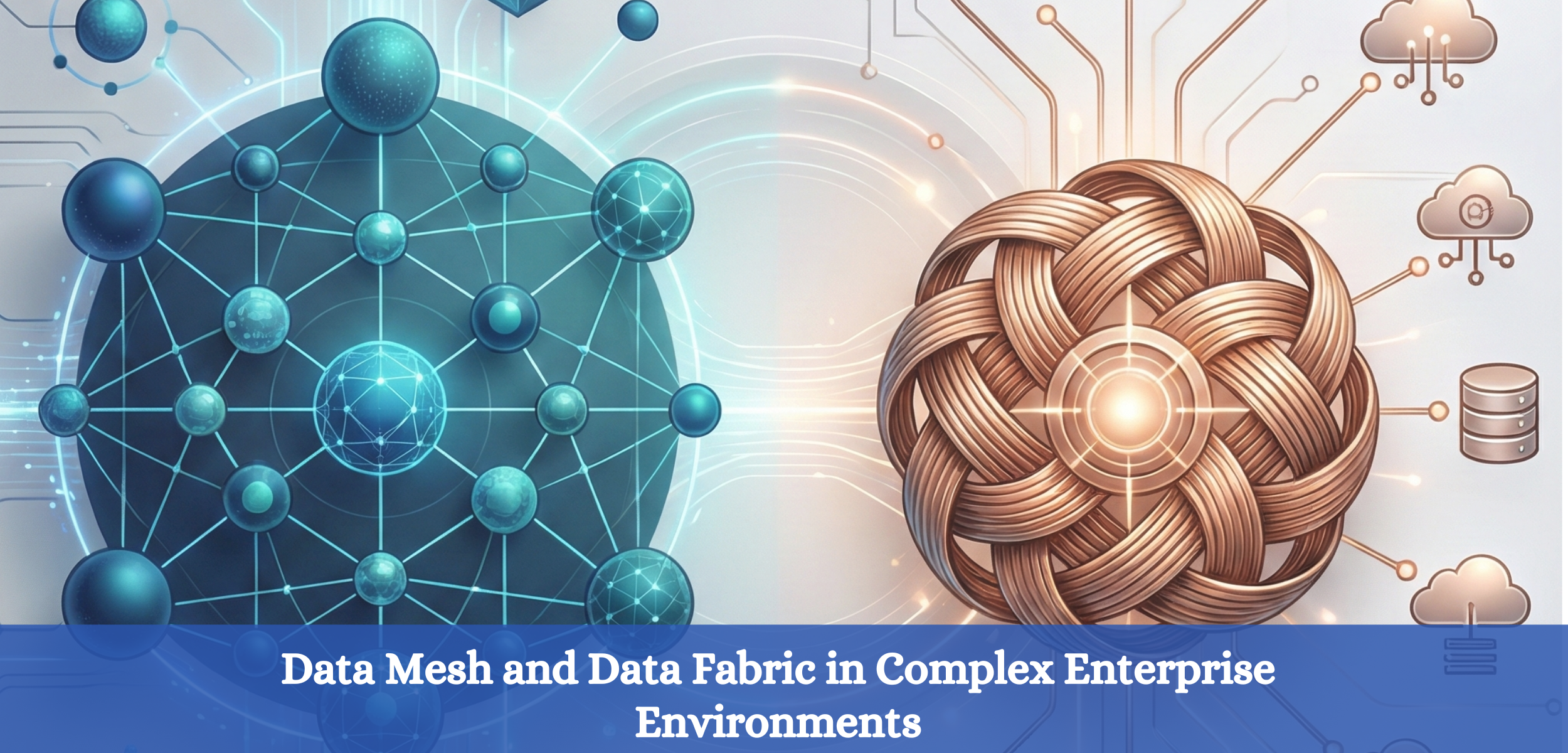
Data Mesh and Data Fabric often appear as two separate strategies, but in practice, they resolve different parts of the enterprise data challenge. When applied together, their strengths reinforce each other and create an ecosystem that scales without losing coherence.
Mesh Defines Ownership, Fabric Enables Connectivity
Data Mesh clarifies who produces the data, who maintains it, and how it should be consumed. It builds discipline at the domain level.
Data Fabric ensures that data can travel across the enterprise with minimal friction. It manages the technical layer for routing, integration, and metadata understanding.
One defines responsibility.
The other supports movement.
Together, they prevent both isolated domains and overly rigid integration structures.
Quality Begins in Domains, Consistency Emerges Across the Ecosystem
Mesh raises the standard of data at the source. This ensures that data products are meaningful, documented, and trustworthy before they reach other teams.
Fabric enforces uniform treatment of those products once they enter the enterprise landscape. Policies, lineage, and metadata structure remain consistent.
The blend produces reliable and reusable data assets at scale.
Automation Amplifies Autonomy
Domains maintain data quality and modeling. Fabric automates:
- Access management
- Data classification
- Quality checks
- Lineage logging
- Pipeline optimization
This removes unnecessary engineering load from domains. They focus on business meaning. The fabric handles infrastructure complexity.
Metadata Links Domains and Creates Enterprise Awareness
Domains publish metadata with every data product. The fabric collects it and builds associations between datasets. This creates:
- Searchable catalogs
- Semantic relationships
- Knowledge graphs
- Cross-domain recommendations
Mesh supplies structured metadata.
Fabric connects it.
The enterprise gains a clear and unified data map.
A System That Grows Without Losing Control
Together, Mesh and Fabric produce a balanced model:
- Autonomous domains
- Automated governance
- Consistent metadata
- Unified discovery
- Faster delivery cycles
The combination reduces friction, improves trust, and allows teams to build on each other’s work.
Implementation Path for Complex Environments
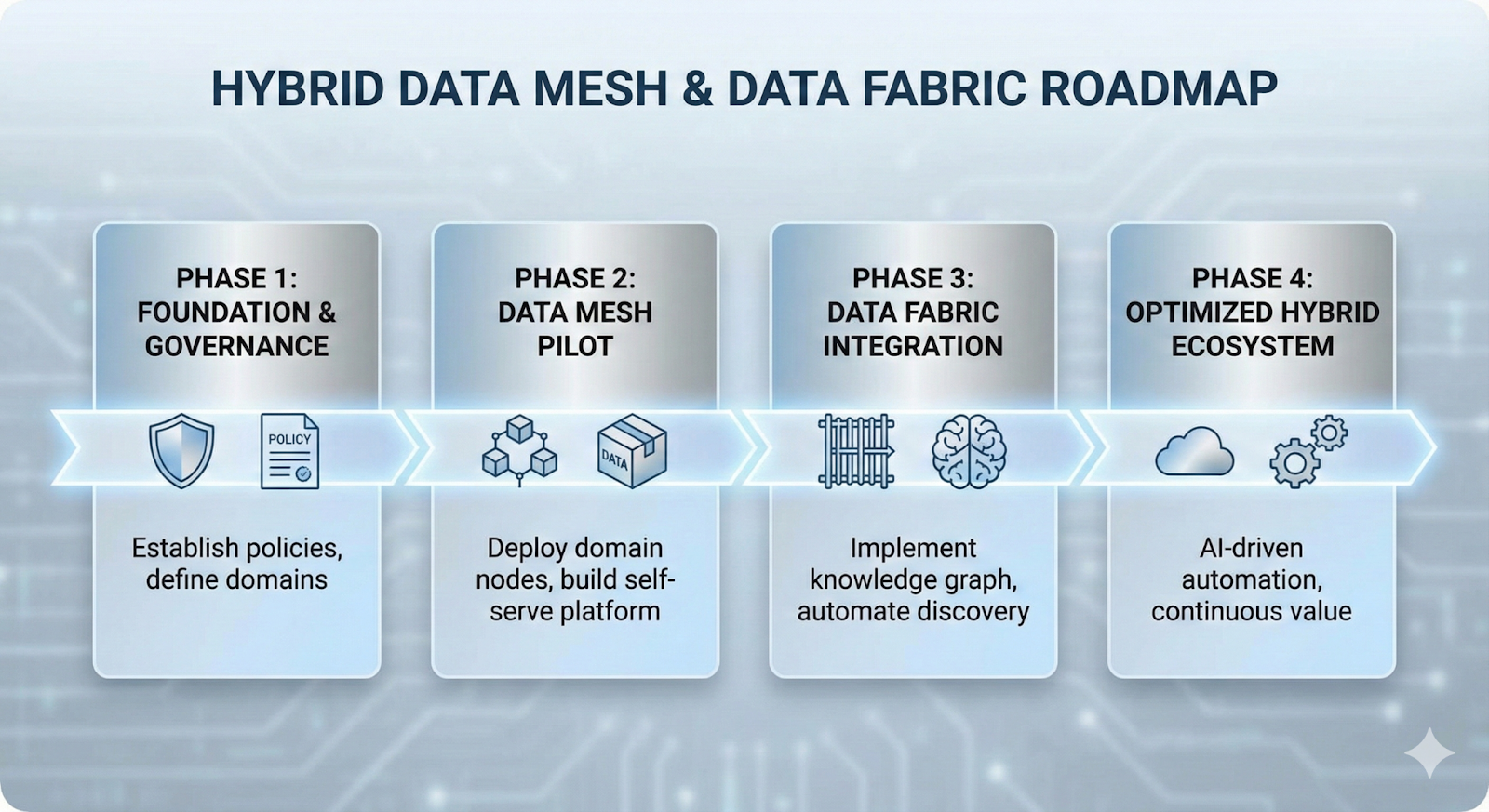
A combined Mesh–Fabric approach requires a deliberate rollout plan. The process typically includes:
- Identifying Domains
Enterprises divide responsibilities based on actual business operations, not technical boundaries. This ensures each domain understands its data deeply.
- Establishing Data Product Standards
Domains create clear guidelines for documentation, schemas, quality checks, contracts, and versioning.
- Building Platform Capabilities
The platform team develops or integrates tooling for:
- Metadata capture
- Data movement
- Governance automation
- Access control
- Cataloging
- Rolling Out Federated Governance
Governance councils standardize policies for security, retention, lineage, and interoperability. Domains follow shared rules without losing autonomy.
- Creating Fabric-Level Intelligence
Metadata pipelines populate the semantic layer. Knowledge graphs expand. Automation supports domain publishing and consumption. This path reduces complexity and builds long-term resilience.
Conclusion
Data Mesh and Data Fabric address different but essential needs in large enterprises. Mesh distributes ownership, strengthens quality, and brings context closer to where data originates. Fabric provides automation, discovery, anconsistency across all platforms. When implemented together, they create a data ecosystem that grows with the organization instead of resisting it.
This blend supports innovation, reduces operational burden, and gives leaders confidence that their decisions rest on clear, trustworthy, and accessible data.
Transform Your Data Ecosystem with Evermethod Inc
If your enterprise is exploring Data Mesh, Data Fabric, or a hybrid model, Evermethod Inc can guide the journey. Our team helps organizations design architectures that stay resilient under scale, deliver consistent governance, and support real-time decision-making. Connect with our experts to build a data foundation that supports your future growth.
%2013.png)